Heat and distortion
Thin material can move. The weld sequence, process selection, and fixture support matter before the robot is blamed for a process issue.





Sheet metal fabrication
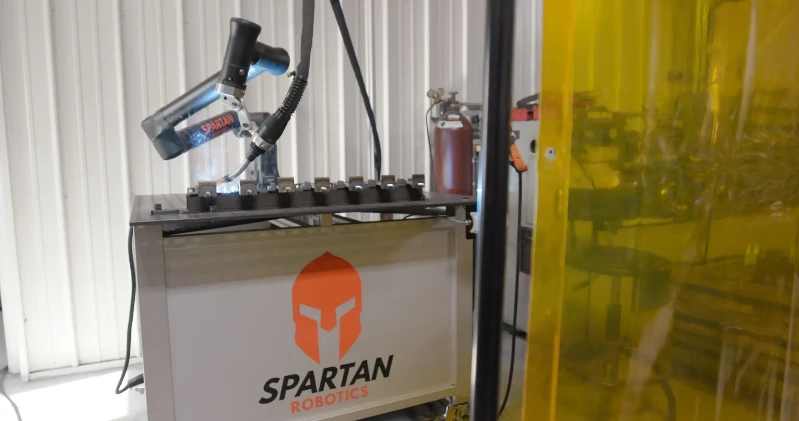
A practical cobot welding path for sheet metal shops working with formed assemblies, covers, guards, cabinets, brackets, and repeat part families.
Sheet metal reality
Sheet metal shops often have a different automation challenge than heavy fabrication. The welds may be shorter, parts may be thinner, and the job mix may change more often. Cabinets, guards, enclosures, trays, frames, covers, and formed assemblies can all be candidates, but only if the process and fixture are consistent enough.
The most important question is usually whether the part family repeats. A cobot welding cell can make sense when similar assemblies come back often enough to justify a fixture and a stable welding process.
What needs attention
Thin material can move. The weld sequence, process selection, and fixture support matter before the robot is blamed for a process issue.
Small gaps and part variation can be a big deal on light material. Repeatability should be checked with normal production parts, not only the cleanest sample.
A job shop may need fixtures and programs that support part families. If every job is one-off, the first automation target should be chosen carefully.
Best next step
For sheet metal shops, the strongest review usually includes a group of similar parts, material thickness, weld process, fixture photos, and the main reason the job is hard to staff or repeat.
Spartan can help decide whether the application is ready for a 7-axis cobot welding cell, needs fixture development, or should be tested first.
Submit a Sheet Metal Part for Review