Size and handling
The best first target may be a repeat subassembly, not the largest trailer frame in the plant. Big parts can work, but part handling and fixturing decide the project quickly.





Trailer manufacturing
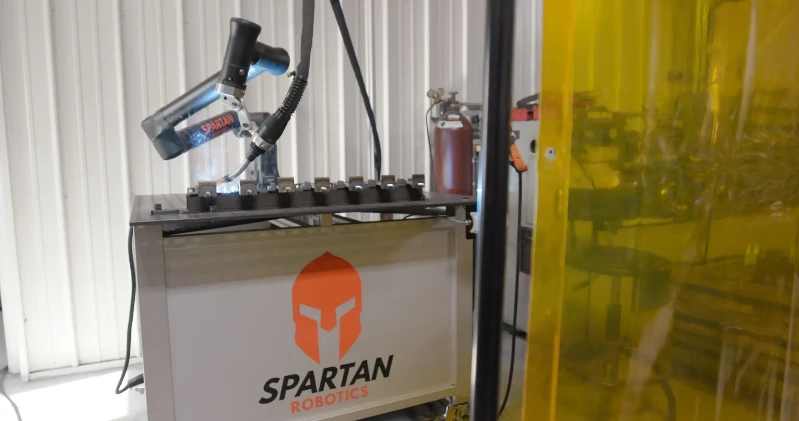
A 7-axis cobot welding path for repeat trailer components, brackets, ramps, gates, and subassemblies where weld access and labor availability matter.
Trailer production reality
Trailer manufacturing usually has a different automation problem than a small bench weldment. Parts can be long, heavy, and awkward to rotate. Welds may be spread across frames, ramps, gates, steps, brackets, fenders, crossmembers, tie-down points, and support structures.
The opportunity is usually not one perfect weld. It is repeated welding across components that show up every day, every week, or every production batch. A 7-axis cobot welding cell becomes more interesting when the shop has repeat parts but weld access, fixture reach, or labor availability keeps slowing production down.
What can make or break it
The best first target may be a repeat subassembly, not the largest trailer frame in the plant. Big parts can work, but part handling and fixturing decide the project quickly.
Tabs, corners, returns, and frame features can block the torch. A 7-axis arm may help, but the fixture still needs to leave room for the torch body and cable package.
If every trailer is different, automation may need a part-family strategy. If the same brackets or subassemblies repeat, those are better first candidates.
Best next step
For trailer manufacturers, the first review should focus on a specific component with repeat demand, known fixture constraints, and a clear reason manual welding is slowing production.
If the access is uncertain, Spartan Bridge can be used to test the real part before deciding whether a full system is the right move.
Submit a Trailer Part for Review